CUSTOM DECORATION SERVICES
Printing & Embroidery Made for Production
Choose the right decoration method for your fabric, artwork, quantity and intended finish, then approve it before bulk production.
Screen Printing
Bold, repeatable color for production runs.
Sublimation
Permanent all-over graphics on polyester.
Embroidery
Durable flat, 3D and patch finishes.
Transfers
Detailed multi-color graphics at flexible MOQ.
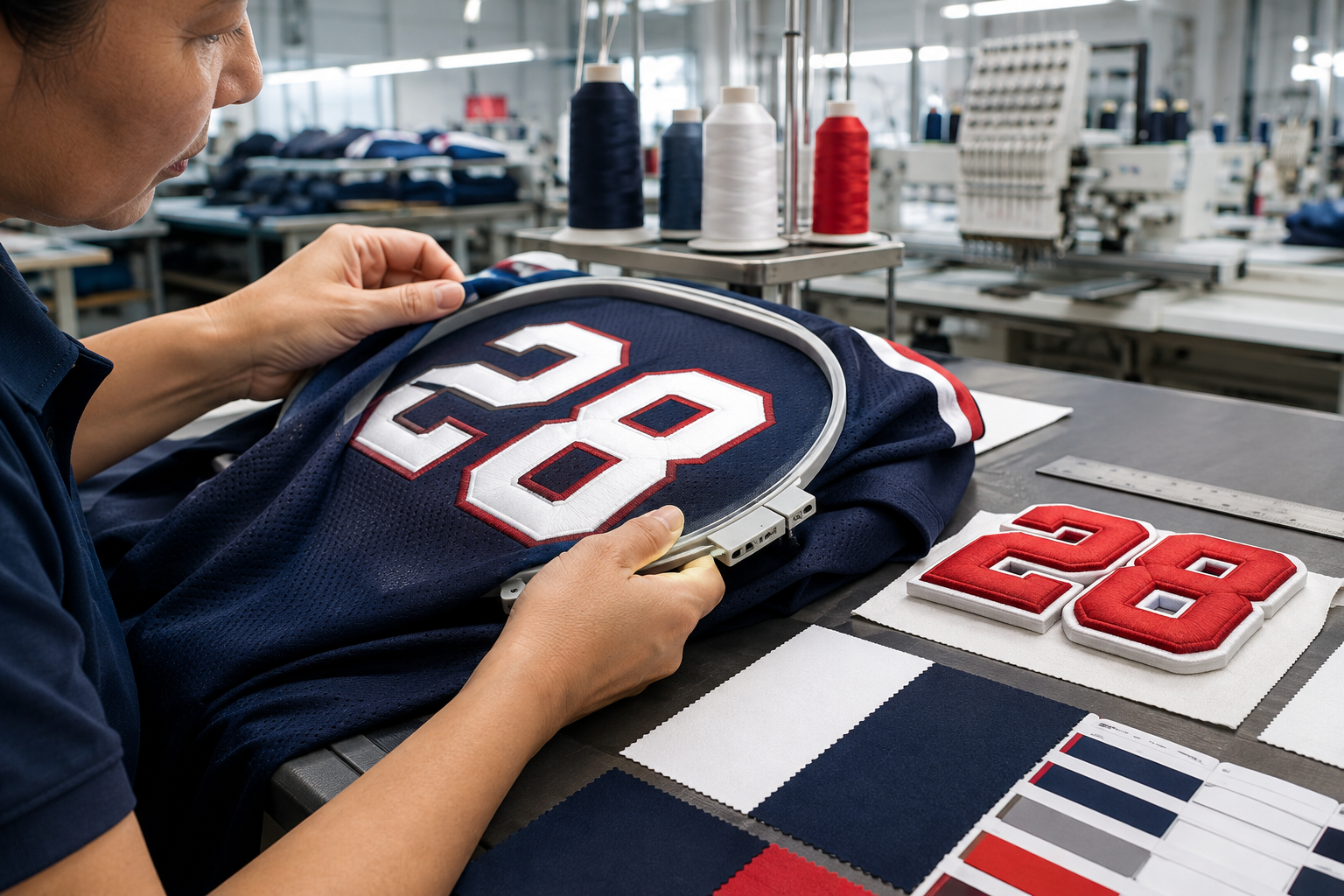
The Method Must Match the Product
Decoration is selected after reviewing the fabric, artwork detail, color count, placement, order quantity and how the garment will be used. This prevents cracking, poor adhesion, puckering and unnecessary cost.
- Technique recommendation based on fabric and artwork
- Color and placement confirmed before production
- Sample or strike-off approval for critical designs
- Bulk consistency checked during decoration
Decoration Techniques
Dye Sublimation
Artwork is transferred into polyester fibers using controlled heat and pressure. The result stays breathable and does not crack or peel.
Best for: team jerseys, all-over prints, gradients and personalized names or numbers
Screen Printing
Ink is pushed through prepared screens for strong color and repeat consistency. Plastisol, water-based and discharge systems are selected to suit the garment.
Best for: T-shirts, hoodies, fleece and medium-to-large runs
Puff & High-Density Print
Special ink expands or builds height to create a clean raised surface. Artwork needs suitable line thickness, spacing and placement.
Best for: streetwear logos, lettering and tactile statement graphics
DTF & Heat Transfer
Detailed artwork is prepared as a transfer and bonded to the garment with controlled temperature, pressure and time.
Best for: multi-color designs, smaller quantities and varied garments
Flat & 3D Embroidery
Digitized stitches, backing, underlay, density and thread are engineered for the fabric. Foam is added where raised 3D embroidery is appropriate.
Best for: polos, caps, jackets, uniforms, chest logos and premium branding
Chenille, Patches & Appliqué
Felt, twill, embroidery, chenille and woven patches can be layered or stitched onto garments for dimensional decoration.
Best for: varsity jackets, collegiate wear, badges and complex branding
Step-by-Step Decoration Process
Artwork moves through technical review, sampling, approval and controlled bulk production.
STEP 1
Artwork & Product Review
We check file quality, dimensions, colors, placement, garment fabric, order quantity and the finish you want.
STEP 2
Technique Recommendation
The most suitable method is proposed with any artwork adjustments needed for clean production and durability.
STEP 3
Color & Placement Confirmation
Pantone references, thread shades, print dimensions and exact garment placement are documented for approval.
STEP 4
Digitizing, Screens or Transfer Setup
Embroidery files, screens, sublimation layouts or transfer files are prepared using the approved artwork.
STEP 5
Strike-Off or Sample
A physical test, patch or complete sample is produced when required to confirm surface, color, scale and placement.
STEP 6
Client Approval
You review the sample or production proof. Corrections are recorded and approval is required before bulk decoration.
STEP 7
Bulk Decoration & In-Line Checks
Approved settings are applied across the order while operators check alignment, registration, tension and consistency.
STEP 8
Curing, Finishing & Final Inspection
Prints are cured or pressed correctly; embroidery is trimmed and cleaned. Final pieces are checked before packing.
Production Quality Checks
Placement
Position and dimensions follow the approved placement map.
Color
Ink and thread shades are compared with approved references.
Surface
Edges, fill, registration, stitch density and finish are inspected.
Durability
Curing, adhesion, backing and construction suitability are verified.
Artwork Preparation Guide
Preferred Files
Information to Include
Important: Very fine lines, tiny text, gradients and distressed details may need adjustment depending on the selected method. We confirm any necessary changes before production.
Printing & Embroidery FAQs
Which decoration method is best for my product?
It depends on fabric, artwork, quantity, placement and desired finish. We review these factors and recommend the most suitable production method before quoting.
Can you match Pantone colors?
Pantone references can be used for ink and thread selection. Textile surfaces and material batches can cause slight visual variation, so a physical sample is recommended for critical colors.
Do I need to approve a sample?
Sample approval is strongly recommended for new designs, large orders, unusual fabrics, complex embroidery and specialty printing such as puff or high-density effects.
Will printing crack or embroidery damage the fabric?
Correct technique, preparation, curing, backing and stitch density reduce these risks. We select settings that suit the specific fabric and intended garment use.
Can you combine multiple decoration methods?
Yes. Embroidery, appliqué, patches and printing can be combined when construction and placement allow it. The sequence is planned before production.
Send Your Artwork for Production Review
Share your product, artwork, quantity and required finish. We will recommend the right technique and prepare a clear production route.